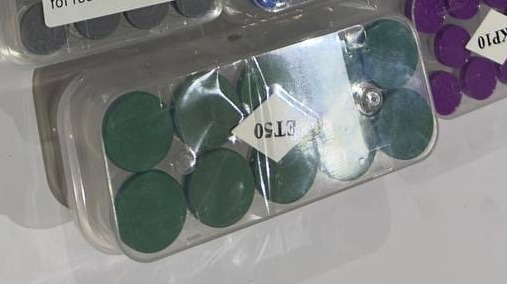
Details from the source.
Source-listed Epithalon (SKU ET50): 50mg*10vials. PriceList(1).pdf lists 152 per 10 vials but does not specify currency; the website displays $152 per 10 vials in USD per owner instruction. The source row does not establish the supplier-specific item's identity, lot quality, or approval.
- Catalogue code
- ET50
- Source specification
- 50mg*10vials
- Source document
- PriceList(1).pdf, page 1
- Photograph
- Owner-supplied photograph; visible package label matched to this catalogue entry. Supplier identity, lot, and product quality have not been independently verified.
Product information is presented from supplied source materials. Inclusion on this website does not state that a product is an approved medicine or authorize human use. This is educational content, not medical advice.
Compound-level research and safety context.
Evidence below concerns the research family associated with this listing. For blends, findings about individual components do not establish evidence for the combination. This does not verify the supplier-specific vial or lot. Reviewed 2026-10-30.
What it is
The catalogue lists the exact name “Epithalon.” The related compound described in scientific literature as epitalon is a synthetic tetrapeptide (Ala-Glu-Asp-Gly), but a common-name alias does not establish the identity, salt/form, purity, or contents of these specific vials. Do not label the catalogue item compounded or research-only without documentation.
Biological mechanism
Research has proposed effects on telomerase activity and telomere length, gene expression/chromatin, oxidative processes, and melatonin/circadian or other neuroendocrine pathways. Human-derived cell experiments report telomerase and telomere changes, but those are in-vitro findings, not effects demonstrated in people. The mechanism is not established or fully understood; findings should not be presented as proven human biology or clinical benefit.
Research focus
Laboratory and animal research has examined cell aging and telomere biology, pineal/circadian and neuroendocrine activity, and oxidative and gene-regulatory effects. FDA reviewed proposed use of epitalon-related bulk substances for insomnia, but its briefing concluded that evidence did not support effectiveness for that indication. These are areas studied or proposed for study, not approved uses.
Potential applications in the evidence
Only as investigated: cellular aging/telomere biology and related neuroendocrine or circadian questions in experimental models. Insomnia was a proposed indication in FDA’s compounding review, not an established application. Human reports involving Epithalamin, a complex pineal extract, sometimes in combination with Thymalin, cannot be transferred as evidence of benefit for synthetic epitalon or for this catalogue vial. No treatment claims or efficacy promises are supported.
Human evidence
A 2003 paper reporting telomerase activity and telomere elongation used cultured human fetal fibroblasts, not human participants. Some older human reports studied Epithalamin (a pineal polypeptide extract), alone or with Thymalin; they do not establish efficacy of synthetic epitalon. A ClinicalTrials.gov record registered in 2026 includes Epitalon among several topical peptides in a broader open-label, single-group study; the study does not isolate Epitalon and the registration itself is not evidence of results. The reviewed sources do not establish clinical benefit of synthetic epitalon in humans.
Known and potential effects
No reliable human adverse-effect rates or a product-specific adverse-effect profile can be established from the reviewed evidence. Laboratory and animal findings, including telomerase/telomere and other biomarker changes, are experimental effects, not demonstrated clinical effects. FDA has identified potential immunogenicity concerns for injectable epitalon-related bulk substances due to aggregation and peptide-related impurities; these concerns do not establish that this catalogue product is injectable or compounded.
Safety and contraindications
FDA reports insufficient safety information for the proposed route and states it cannot determine from available information whether use could cause harm. For injectable compounded forms, FDA raises potential immunogenicity from aggregation and peptide-related impurities and concerns about inadequate characterization of identity, purity, and quality. The catalogue gives no manufacturer, lot, formulation, route, sterility/quality documentation, or certificate of analysis, so risks and contraindications for the exact vial cannot be verified. Do not imply safety or provide a contraindication list unsupported by evidence.
U.S. FDA / regulatory status
FDA’s 2026 briefing states that epitalon free base and epitalon acetate are not components of an FDA-approved drug and proposes that neither be included on the Section 503A bulk-substances list. The compounding-list/advisory process is separate from FDA approval of a drug product. No approval or authorization for the supplier-specific ET10/ET50 vials can be verified from the catalogue. Do not infer that any approval of another active ingredient, brand, form, or product applies to these vials. The exact vial’s jurisdictional status remains unverified.
Evidence limitations
Major limitations include the difference between synthetic epitalon and Epithalamin extract; in-vitro or animal findings that do not demonstrate human benefit; older, limited, and not independently confirmed clinical reports on the extract; uncertain nomenclature and substance preparation; insufficient clinical safety data; and no lot/manufacturer documentation for the catalogue vials. The public FDA briefing evaluates identified epitalon-related bulk substances, not this supplier-specific item.
Supporting sources
- FDA Briefing Document: Epitalon-Related Bulk Drug Substances U.S. Food and Drug Administration · Regulatory briefing document. Supports: Nomenclature and chemical-form uncertainty; FDA’s proposed 503A-list disposition; absence from FDA-approved drug components; proposed insomnia use and FDA’s stated evidence and safety concerns.
- Certain Bulk Drug Substances for Use in Compounding that May Present Significant Safety Risks U.S. Food and Drug Administration · Regulatory safety communication. Supports: FDA’s concerns about potential immunogenicity, aggregation, peptide-related impurities, and insufficient safety information for epitalon-related compounded substances.
- Overview of Epitalon—Highly Bioactive Pineal Tetrapeptide with Promising Properties International Journal of Molecular Sciences / PubMed Central · Peer-reviewed review. Supports: Compound-level description, proposed mechanisms and research themes, the uncertain mechanism, and limitations of the evidence.
- Epithalon peptide induces telomerase activity and telomere elongation in human somatic cells PubMed / National Library of Medicine · Primary in-vitro study. Supports: A reported telomerase/telomere effect in cultured human fetal fibroblasts; supports distinguishing human-cell experiments from clinical studies in people.
- Peptides of pineal gland and thymus prolong human life PubMed / National Library of Medicine · Clinical trial publication. Supports: Older human report involving Epithalamin and Thymalin, clarifying that it did not evaluate the synthetic tetrapeptide in isolation.
- Systemic and Topical Geroprotective Rejuvenation Assessed by START/REST Aging Clocks ClinicalTrials.gov / National Library of Medicine · Clinical trial registry. Supports: Registered 2026 study in which Epitalon is one of multiple topical peptides within a broader, open-label study; registration does not establish results or an isolated Epitalon effect.