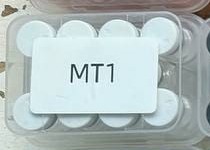
Details from the source.
Source-listed MT-1 (SKU MT1): 10mg*10vials. PriceList(1).pdf lists 48 per 10 vials but does not specify currency; the website displays $48 per 10 vials in USD per owner instruction. The source row does not establish the supplier-specific item's identity, lot quality, or approval.
- Catalogue code
- MT1
- Source specification
- 10mg*10vials
- Source document
- PriceList(1).pdf, page 1
- Photograph
- Owner-supplied photograph; visible package label matched to this catalogue entry. Supplier identity, lot, and product quality have not been independently verified.
Product information is presented from supplied source materials. Inclusion on this website does not state that a product is an approved medicine or authorize human use. This is educational content, not medical advice.
Compound-level research and safety context.
Evidence below concerns the research family associated with this listing. For blends, findings about individual components do not establish evidence for the combination. This does not verify the supplier-specific vial or lot. Reviewed 2026-10-30.
What it is
The exact supplier label is “MT-1” (SKU MT1). The source lists *10vials and price 48 per 10 vials (currency unstated). The source does not identify the active ingredient, sequence, salt, formulation, route, manufacturer, or lot. Afamelanotide is a peptide, but whether this catalogue item is afamelanotide—or even a peptide—cannot be verified from the supplied records. Do not equate it with afamelanotide or SCENESSE without owner documentation.
Biological mechanism
If the intended compound is afamelanotide, it is an α-MSH analogue and MC1R agonist that stimulates melanocytes to produce eumelanin. In the approved EPP context, this can reduce light penetration and phototoxic reactions. This mechanism is conditional on compound identity and has not been verified for the catalogued vial.
Research focus
Published afamelanotide research and the approved medicine focus on erythropoietic protoporphyria (EPP), a rare condition associated with painful light-triggered reactions. Research examined pain-free light exposure and phototoxic reactions. These findings concern a defined afamelanotide implant, not a product identified only as MT-1.
Potential applications in the evidence
Only a narrow application is supported for the specific medicine afamelanotide: increasing pain-free light exposure in adults with EPP, as specified in the SCENESSE label. There is no substantiated application for this unidentified catalogue vial; evidence for afamelanotide does not establish cosmetic tanning, general sun protection, or use of this vial.
Human evidence
Two randomized, placebo-controlled phase 3 studies evaluated a specified afamelanotide implant in adults with EPP. The published report found longer median pain-free sunlight exposure with afamelanotide than placebo in both trials; one trial also reported fewer phototoxic reactions. This does not establish efficacy or safety for the source-listed *10vials item or for uses outside EPP. No direct clinical evidence for the catalogued item was identified.
Known and potential effects
For the approved afamelanotide implant, FDA labeling reports implant-site reactions and nausea among common adverse reactions. Events occurring in more than 2% of trial participants also included oropharyngeal pain, cough, fatigue, dizziness, skin hyperpigmentation, somnolence, melanocytic nevus, respiratory infection, non-acute porphyria, and skin irritation. Postmarketing reports include hypersensitivity, including anaphylaxis. These are not a complete or verified risk profile for the unidentified catalogue vial.
Safety and contraindications
The SCENESSE label contraindicates use in people with a history of severe hypersensitivity to afamelanotide or its excipients; serious hypersensitivity, including anaphylaxis, has been reported. The label warns that pigmentation may increase and existing moles or freckles may darken, and recommends full-body skin examinations. The exact vial’s contents, excipients, sterility, quality, and manufacturing controls are undocumented. FDA’s general concerns about unapproved new drugs include lack of FDA review of safety/effectiveness, quality consistency, and labeling accuracy; that general warning does not determine the status of this specific vial.
U.S. FDA / regulatory status
FDA approved SCENESSE (afamelanotide) implant in 2019 to increase pain-free light exposure in adults with a history of phototoxic reactions from EPP. That approval is product-, formulation-, and indication-specific and does not transfer to the supplier-specific item labeled MT-1. FDA Import Alert 66-41 contains an entry for “Melanotan (I and II)” noting certain imports represented as non-human research products and then sold online as unapproved new drugs. This does not prove the catalogued vial is one of those products or establish its ingredients or exact legal status. The supplied PDF does not establish FDA approval, manufacturer, lot, formulation source, jurisdiction, or approval by any other regulator. Do not call the item compounded or research-only absent reliable documentation.
Evidence limitations
The supplier label is chemically ambiguous, and no direct study of this catalogue item was found. Afamelanotide evidence concerns a defined implant in a limited adult EPP population, with disease-specific outcomes and finite study duration; it cannot be transferred to another formulation, strength, route, or unidentified vial. FDA approval materials describe postmarketing monitoring for long-term safety concerns including skin cancer and implant-site reactions. Animal or in-vitro findings on melanocortin biology do not establish clinical effects for this product. The catalog price has no stated currency.
Supporting sources
- SCENESSE (afamelanotide) Prescribing Information U.S. Food and Drug Administration · Official prescribing label. Supports: Labeled active ingredient, peptide-related pharmacology, approved indication and formulation, mechanism, contraindication, warnings, skin monitoring, and adverse reactions.
- Scenesse: European Public Assessment Report European Medicines Agency · Regulator assessment / product information. Supports: Afamelanotide identity, MC1R/eumelanin mechanism, EPP context, summarized human evidence and adverse effects, and limitations associated with exceptional-circumstances authorization.
- Afamelanotide for Erythropoietic Protoporphyria The New England Journal of Medicine · Peer-reviewed primary human study. Supports: Two randomized placebo-controlled phase 3 studies in adults with EPP, study formulation, pain-free sunlight exposure outcomes, phototoxic reactions, and trial limitations.
- Import Alert 66-41: Detention Without Physical Examination of Unapproved New Drugs Promoted in the U.S. U.S. Food and Drug Administration · Regulatory import alert. Supports: General FDA concerns about unapproved new drugs and the alert entry describing Melanotan (I and II); does not identify or adjudicate this catalogue vial.
- NDA Approval Letter for Scenesse, NDA 210797 U.S. Food and Drug Administration · FDA approval letter. Supports: FDA approval of the specific Scenesse afamelanotide implant and its narrow EPP indication; product-specific postmarketing safety obligations.