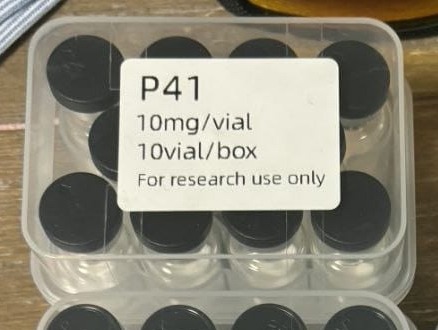
Details from the source.
This catalogue entry records PT-141, 10 mg × 10 vials (SKU P41), using the supplied source listing. The cited dossier describes: Human research has chiefly studied bremelanotide for acquired, generalized hypoactive sexual desire disorder (HSDD) in premenopausal women. Other proposed neural mechanisms are supported in part by preclinical research and should not be treated as demonstrated clinical effects. It also distinguishes available human evidence, limitations, safety concerns, and regulatory context. It does not verify this supplier-specific item’s identity, formulation, lot quality, or approval. This is not medical advice, a treatment recommendation, or authorization for human use.
- Catalogue code
- P41
- Source specification
- 10mg*10vials
- Source document
- PriceList(1).pdf, page 1
- Photograph
- Owner-supplied photograph; visible package label matched to this catalogue entry. Supplier identity, lot, and product quality have not been independently verified.
Product information is presented from supplied source materials. Inclusion on this website does not state that a product is an approved medicine or authorize human use. This is educational content, not medical advice.
Compound-level research and safety context.
Evidence below concerns the research family associated with this listing. For blends, findings about individual components do not establish evidence for the combination. This does not verify the supplier-specific vial or lot. Reviewed 2026-10-30.
What it is
The catalogue lists PT-141 (SKU P41). Bremelanotide is a synthetic cyclic heptapeptide, and published literature uses PT-141 in this scientific context; however, the catalogue alone does not verify that this supplier vial contains bremelanotide or identify its chemical form. The supplied documents do not establish that this item is compounded or research-only.
Biological mechanism
If the listing is bremelanotide, FDA labeling describes non-selective melanocortin-receptor activation, with MC1R and MC4R binding most relevant at therapeutic levels. The mechanism by which the approved VYLEESI formulation improves HSDD is unknown. Animal-based hypotheses about MC4R and dopamine signaling are not established human mechanisms.
Research focus
Human research has chiefly studied bremelanotide for acquired, generalized hypoactive sexual desire disorder (HSDD) in premenopausal women. Other proposed neural mechanisms are supported in part by preclinical research and should not be treated as demonstrated clinical effects.
Potential applications in the evidence
The evidence reviewed supports describing HSDD in premenopausal women as the focus of bremelanotide clinical trials and the specific U.S.-approved VYLEESI indication. The VYLEESI label excludes postmenopausal women, men, and sexual-performance enhancement. These facts do not establish an application for the unidentified P41 vial or other populations.
Human evidence
Two phase 3 randomized, placebo-controlled trials of bremelanotide reported statistically significant improvements in questionnaire scores for sexual desire and distress related to low desire. The blinded period was 24 weeks; an extension was open-label and uncontrolled. The evidence is specific to the studied pharmaceutical formulation and trial population. It does not establish efficacy or safety for this catalogue vial.
Known and potential effects
In trials of the approved VYLEESI formulation, reported adverse effects included nausea, flushing, injection-site reactions, headache, and vomiting. Its labeling also reports transient blood-pressure increases and heart-rate decreases, focal hyperpigmentation, and effects on gastric emptying. These label-based findings are not a verified adverse-effect profile for P41.
Safety and contraindications
The VYLEESI label contraindicates its identified formulation for people with uncontrolled hypertension or known cardiovascular disease. It warns about blood-pressure and heart-rate changes, possible persistent focal hyperpigmentation, nausea, delayed gastric emptying and interactions affecting oral medicines, including reduced oral naltrexone exposure. It advises discontinuation if pregnancy is suspected. This information cannot establish safety, contraindications, or interaction risks for an unidentified vial; the catalogue provides no manufacturer, formulation, lot, or quality information.
U.S. FDA / regulatory status
FDA Drugs@FDA records approval of NDA 210557 for VYLEESI (autoinjector), with bremelanotide acetate as the active ingredient. FDA approval applies to that identified branded formulation and its labeled indication; it does not transfer to the supplier-specific PT-141 listing. The supplied catalogue does not identify the P41 vial's contents, manufacturer, lot, formulation source, jurisdiction, or authorization. Its FDA approval status therefore cannot be verified. Available information also does not establish that it is compounded or research-only.
Evidence limitations
The catalogue source specifies PT-141, SKU P41, *10vials, and price 56 per 10 vials; currency is not stated. No reviewed source verifies the exact vial's identity, composition, quality, manufacturer, or regulatory status. Human evidence is limited to the studied bremelanotide formulations, selected study populations, and measured outcomes; the open-label extension had no placebo comparison. Preclinical mechanism hypotheses must remain separate from human findings.
Supporting sources
- VYLEESI—bremelanotide injection prescribing information U.S. National Library of Medicine, DailyMed · Official drug label. Supports: VYLEESI indication and formulation, bremelanotide mechanism and peptide description, pivotal human trials, adverse effects, warnings, contraindications, and limitations of use.
- Drugs@FDA: FDA-Approved Drugs, NDA 210557 U.S. Food and Drug Administration · Regulatory database. Supports: FDA approval record identifies VYLEESI autoinjector and bremelanotide acetate active ingredient, and supports the distinction between that approved formulation and the unidentified catalogue vial.
- Bremelanotide for the Treatment of Hypoactive Sexual Desire Disorder: Two Randomized Phase 3 Trials Obstetrics & Gynecology; PubMed/National Library of Medicine · Peer-reviewed primary human study. Supports: Phase 3 trial design, population, outcomes, and adverse events in premenopausal women with HSDD.
- The neurobiology of bremelanotide for the treatment of hypoactive sexual desire disorder in premenopausal women CNS Spectrums; PubMed/National Library of Medicine · Peer-reviewed review. Supports: Review of melanocortin receptor activity and distinction between animal-based mechanism hypotheses and established human evidence.
- Study to Evaluate the Efficacy/Safety of Bremelanotide in Premenopausal Women With HSDD, NCT02333071 ClinicalTrials.gov, U.S. National Library of Medicine · Clinical trial registry. Supports: Registered phase 3 study design, population, intervention identity, and completion status; does not establish the identity or authorization of the catalogue item.